The CMO role is evolving, from creative to technical, and it may have finally found a C-suite ally in the CIO.

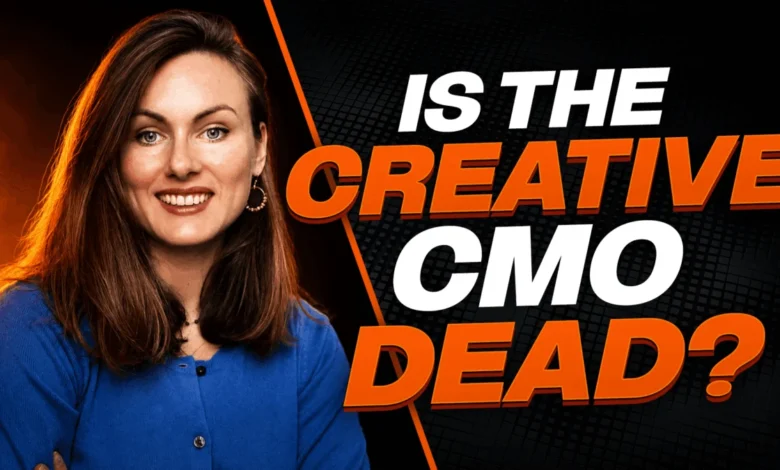
Is the traditional, purely creative Chief Marketing Officer becoming a relic of the past? As artificial intelligence reshapes enterprise operations, corporate boards increasingly demand strict revenue accountability and verifiable return on investment (ROI). This paradigm shift is forcing a radical reinvention of marketing leadership. The modern CMO can no longer operate solely as a custodian of brand aesthetics and storytelling; instead, they must function as a technologist, data scientist, and operational strategist capable of navigating complex technical ecosystems.
These sweeping transformations took center stage in a recent episode of Conversations with MarTech, hosted by Mike Pastore, Head of Content & Media at Third Door Media. The discussion featured Valeria Balaro, Chief Marketing Officer at Star, an AI-native technology consulting firm based in London. Balaro, who oversees a multidisciplinary team of 20 marketing professionals spanning brand development, demand generation, and content creation, brought her unique blend of innovation-driven vision and technical acumen to the table to dissect the structural changes redefining executive marketing roles.

Drawing on recent collaborative research conducted alongside analyst firm Forrester, Balaro detailed how traditional corporate boundaries are blurring. The data underscores an undeniable reality: a formalized marketing technology (martech) background is rapidly transitioning from a competitive advantage to a non-negotiable prerequisite for top-tier marketing roles. Consequently, industry experts project that the next generation of CMOs will predominantly emerge from the ranks of marketing operations (MOps) rather than traditional creative pathways.
The Genesis of the Technical CMO: From Art to Architecture
For decades, the archetype of the CMO was defined by creative intuition, campaign big ideas, and brand narrative control. While these elements remain vital, they now share equal footing with data infrastructure, customer data platforms (CDPs), attribution modeling, and artificial intelligence integration.
This transformation did not occur overnight. Over the past fifteen years, the proliferation of software-as-a-service (SaaS) tools exploded the martech landscape from a few hundred solutions to over 10,000 distinct platforms. Marketers were suddenly buried beneath floods of telemetry, web analytics, and behavioral data. Initially, marketing departments attempted to outsource or delegate these complex technical architecture decisions to IT departments. However, the speed of modern commerce made this siloed approach untenable.

Today’s enterprise marketing leaders must actively architect their own tech stacks. They must understand API integrations, data hygiene, predictive analytics, and machine learning models. Balaro emphasized during the podcast discussion that AI has accelerated this evolution exponentially. Generative AI tools and autonomous agentic systems are no longer experimental novelties; they are embedded directly into daily operations, requiring marketing chiefs to evaluate algorithmic performance just as critically as creative copy.
Forging the Ultimate C-Suite Alliance: CMO Meets CIO
One of the most consequential developments highlighted in the recent Forrester research and discussed on the show is the shifting dynamic between the CMO and the Chief Information Officer (CIO). Historically, the relationship between marketing and IT was fraught with friction. Marketing viewed IT as a bureaucratic bottleneck that moved too slowly, while IT viewed marketing as impulsive creators demanding custom integrations that compromised enterprise security and data governance.
That adversarial relationship is giving way to a powerful C-suite alliance. As customer experience (CX) becomes entirely digitized, the lines distinguishing IT infrastructure from marketing touchpoints have effectively vanished. Modern customer journeys are mediated entirely through software, applications, and personalized digital interfaces.
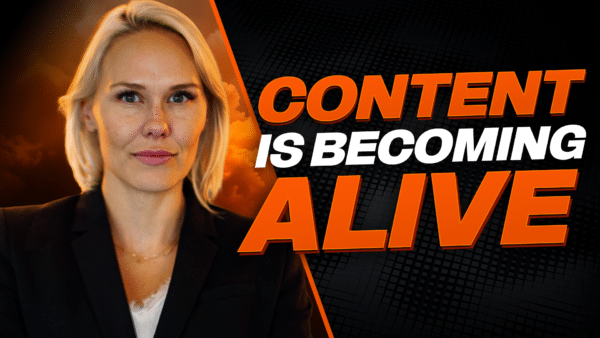
To deliver seamless omnichannel experiences, the CMO needs the CIO’s engineering prowess, cybersecurity oversight, and data architecture frameworks. Conversely, the CIO needs the CMO’s deep understanding of customer behavior, engagement metrics, and revenue drivers to ensure that technology investments yield tangible business outcomes. Balaro characterized this partnership as the modern "Power Duo" of the corporate executive suite, noting that organizations where the CMO and CIO collaborate closely consistently outperform competitors in digital maturity and customer retention.
The Rise of Marketing Operations as the Executive Breeding Ground
As technical proficiency becomes a baseline requirement, the traditional recruitment pipeline for CMOs is undergoing a structural overhaul. Historically, companies looked to creative directors, agency veterans, or brand strategists to fill the executive seat. While these leaders possessed elite storytelling capabilities, many struggled to defend marketing budgets during economic downturns due to an inability to tie expenditures directly to pipeline velocity and closed-won revenue.
According to Balaro, the executive pipeline has shifted downward and inward toward Marketing Operations (MOps). Professionals with a background in MOps possess an intrinsic understanding of data flows, lead scoring mechanisms, attribution models, and marketing automation platforms. They speak the language of analytics and revenue accountability natively.

This operational pedigree equips future CMOs with the exact toolkit needed to manage sophisticated AI deployments and complex data privacy regulations. When a marketing leader rises through operations, they bring a rigorous, engineering-like discipline to campaign execution, transforming marketing from a cost center into a predictable, scalable revenue engine.
Implications for the Modern Enterprise and Career Paths
The evolution of the CMO role carries profound implications for individual career development and corporate governance. For marketing professionals aiming to ascend the corporate ladder, continuous upskilling in data analytics, AI deployment, and marketing technology is no longer optional. Professionals who neglect the technical dimensions of the discipline risk professional obsolescence.
For enterprises, boards of directors and Chief Executive Officers must re-evaluate how they assess marketing performance and structure executive searches. Companies that continue to evaluate CMO candidates solely on past creative portfolios risk hiring leaders who are ill-equipped to manage modern, data-saturated, AI-driven marketing ecosystems. Executive search committees are increasingly prioritizing candidates who demonstrate a balanced competency: creative vision paired with deep technical literacy.

Furthermore, the integration of AI into content operations and demand generation means that enterprises must foster cultures of cross-functional agility. Silos between brand marketing, demand generation, product marketing, and IT must be systematically dismantled. Balaro’s insights from Star demonstrate that successful marketing organizations are those that treat technology and creativity not as opposing forces, but as interdependent pillars of modern business strategy.
As the corporate landscape continues to adapt to rapid technological advancements, the mandate for marketing leadership is clear. The future belongs to leaders who can inspire audiences with compelling narratives while simultaneously optimizing the complex algorithms and data architectures that deliver those stories to the right screen, at the exact right moment, with verifiable financial returns.